Monday, 16 June, 2025 - 12:18
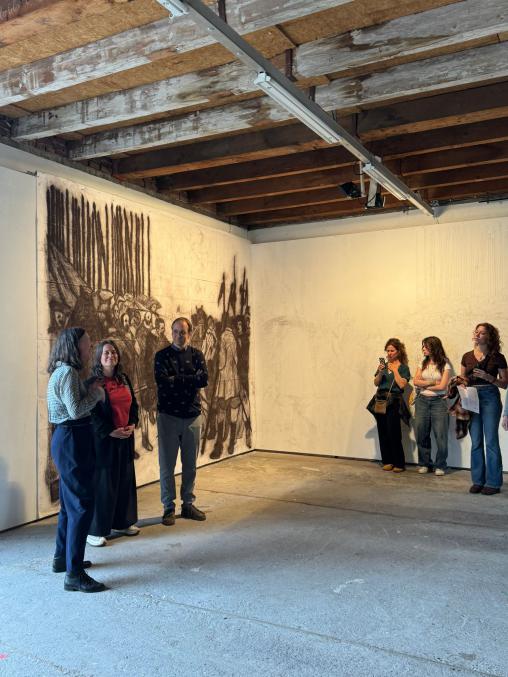
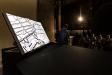
To accommodate all visitors who were unable to attend the opening of the exhibition at Witte Rook due to the railway strike on that day, we are organising an artist talk next to the work on Sunday 22 June. Come and listen to the history and underlying motives of the installation Shadow Play. The exhibition will run until 13 July 2025.
Artist Talk | Sunday 22 June 2025
Time | 14:00
Location | StadsGalerij - Witte Rook
Address | Oude Vest 34, Breda
Read more
Wednesday, 14 May, 2025 - 10:48
Shadow Play is the artistic result of the Las Lanzas project in which Iratxe Jaio and Klaas van Gorkum investigated the origin and meaning of the various copies of the painting La Rendición de Breda by Diego Velázquez.
On 6 June at 19:00, the exhibition will open in the StadsGalerij in Breda and will then be on display until 13 July.
Read more
Wednesday, 14 May, 2025 - 10:07
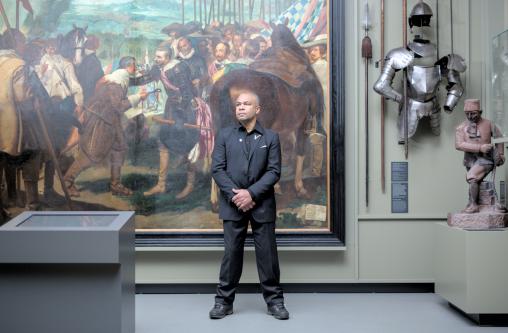
A tryptich on power relations, representation and the long shadow cast by history
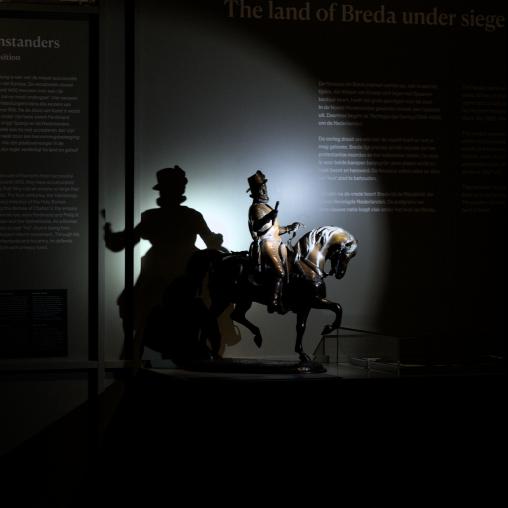
Shadow Play is a three-channel video installation, and it is the artistic outcome of a two-year investigation into the copies of Diego Velázquez’s renowned painting The Surrender of Breda, and the semi-public spaces in which these copies can be found in the city. The point of departure for this project is the idea that the context determines the meaning of a work of art. While the original, housed in Madrid’s Prado Museum, celebrates the Spanish victory during the Siege of Breda, in the Stedelijk Museum Breda the painting’s portrayal of Dutch defeat is no obstacle to its role as a centrepiece in an exhibition celebrating the grandeur of the House of Oranje-Nassau. Meanwhile, in Breda's City Hall, the canvas serves daily as a backdrop for countless wedding photographs.
The video installation presents the various versions of the painting side by side, with a particular focus on the scenes that unfold around and in front of them. For instance, in the museum, conservators carefully hang Kees Maks’ 1903 canvas into place, while in the city hall, students from the St. Joost School of Art & Design stage a 1970s squatter protest in front of Fernando Coll’s 1931 copy. At the Prado, Dutch diplomats pose before the 1634 original, and at the military academy, military cadets stand to attention in front of André-Julien Prévost’s 1872 painting.
Artist Roel Meelkop composed a soundscape for the videos that accentuates or distorts the acoustics of the various filming locations, thereby emphasizing the distance between audience and the image.
Shadow Play blurs the lines between past and present, observer and observed, and invites new interpretations of Velázquez’s centuries-old tableau.
Read more
Monday, 12 May, 2025 - 17:25
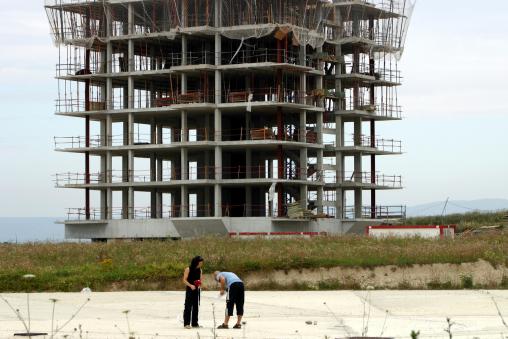
Our 2007 video "Desde aquí hasta ahí" will be screened at the Kurzfilm Festival Hamburg, in a special programme on Social Housing curated by Florian Wüst. It was filmed at the height of the Spanish property bubble. The video explores the notion of home within the context of the urban expansion of Vitoria-Gasteiz, the capital of the Basque Country. It follows young adults who prepare for a new stage in their lives: How to plan the furnishing of a recently purchased apartment yet to be finished? How to cater for the birth of the first child? These personal experiences are juxtaposed with documentation of a lottery organized by the authorities to allocate subsidized houses and of activists claiming the refurbishment of empty buildings in the center of the city.
Read more
Tuesday, 26 November, 2024 - 12:50
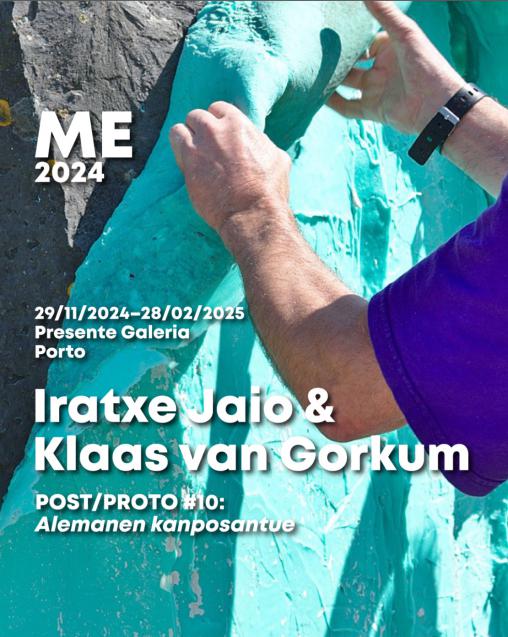
Iratxe Jaio and Klaas van Gorkum present their project 'Alemanen kanposantue' for the first time in Portugal, at Galeria Presente, as part of the MostraEspanha2024 programme.
The installation revolves around the reconstruction of a monument dedicated to three Nazi soldiers killed in the Spanish Civil War. Its surface has been chipped and damaged by years of vandalism and the accumulation of layers of political graffiti. The sculpture reproduces this surface, treating it as a palimpsest of all the informal attempts to dismantle and appropriate the object loaded with ideology.
29/11/2024-28/02/2025, Galeria Presente
Rua Anselmo Braancamp 483, Porto, Portugal
Read more
Monday, 23 September, 2024 - 10:46
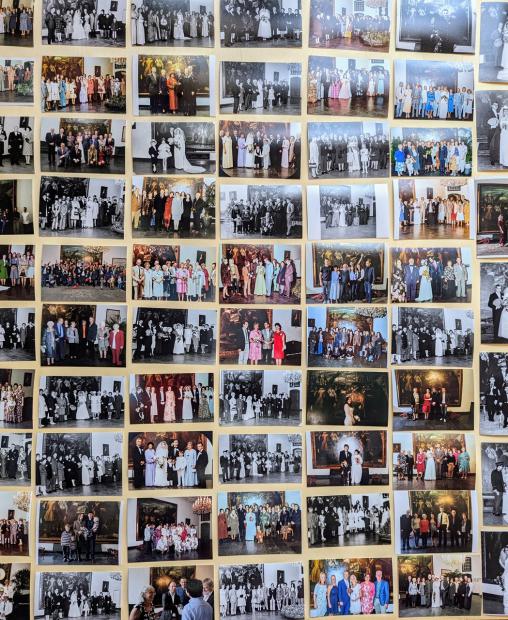
A famous painting hangs in the town hall in Breda, just outside the wedding rooms. It can be seen in the background of hundreds of photos that are taken right after the marriage ceremonies.
The artists Iratxe Jaio and Klaas van Gorkum have called on the residents of Breda to search through their albums for such photos and to submit them for a large, joint exhibition. The result of the many submissions can be seen in Nieuwe Veste during the Breda Month of History.
On October 4, the artists Jaio and Van Gorkum will give a lecture in the Stedelijk Museum Breda. They will talk about their project that they are carrying out at the invitation of Witte Rook, in which they go in search of the backgrounds of the copies of the painting by Velázquez. The lecture in the auditorium is accessible with a ticket for the museum. Monique Rakhorst, curator of old art at the museum, will be present at the lecture to provide a historical perspective on the painting.
October 1 - November 24, 2024:
- Exhibition in the Nieuwe Veste, Molenstraat 6, 4811 GS Breda.
October 4 3:00 PM:
- Lecture by Iratxe Jaio and Klaas van Gorkum in the Stedelijk Museum Breda
October 11 7:00 PM:
- Opening in the Nieuwe Veste
Read more
Thursday, 12 September, 2024 - 09:44
Welcome to the fifth edition of the Groot Rotterdams Atelier Weekend (GRAW) on September 21 and 22, 2024!
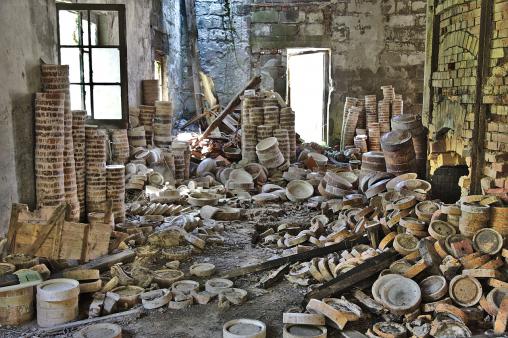
Many years ago, we explored the ruins of an abandoned porcelain factory. Under a thick layer of soil, vines and weeds, we discovered the original plaster molds from which the tableware was cast. After carefully cleaning and drying the molds, we tried to put them back into production.
Would you like to see the results? Come and visit our studio in the weekend of September 21 and 22, at Ackersdijkstraat 20, in Rotterdam.
Read more
Thursday, 15 February, 2024 - 10:51
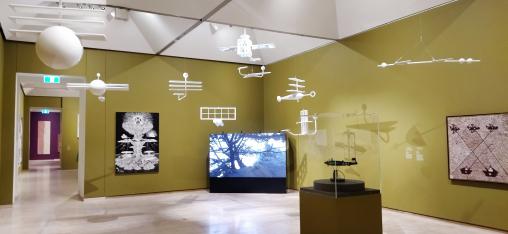
We are honoured to announce our participation in Ten Thousand Suns, the 24th edition of the Biennale of Sydney, curated by Inti Guerrero and Cosmin Costinas. The Biennale has commissioned us to produce a new series of sculptures for the installation False Flag.
These sculptures are inspired by the surrealistic warplanes painted by René Magritte in 1937, when he learned of the Nazi bombardement of the Basque town Guernica. They will be displayed together with a video in which the mountains surrounding Guernica play the main role. Read more about this project here.
Read more
Tuesday, 30 January, 2024 - 15:41
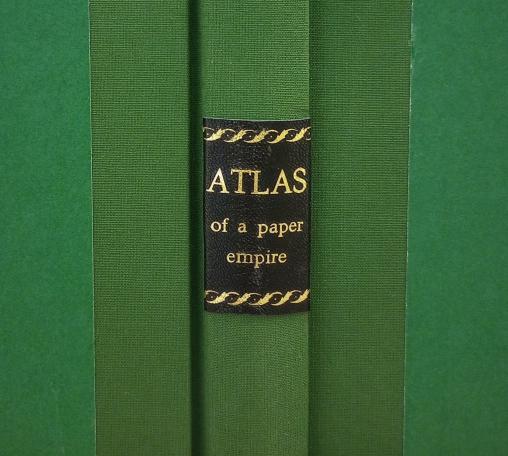
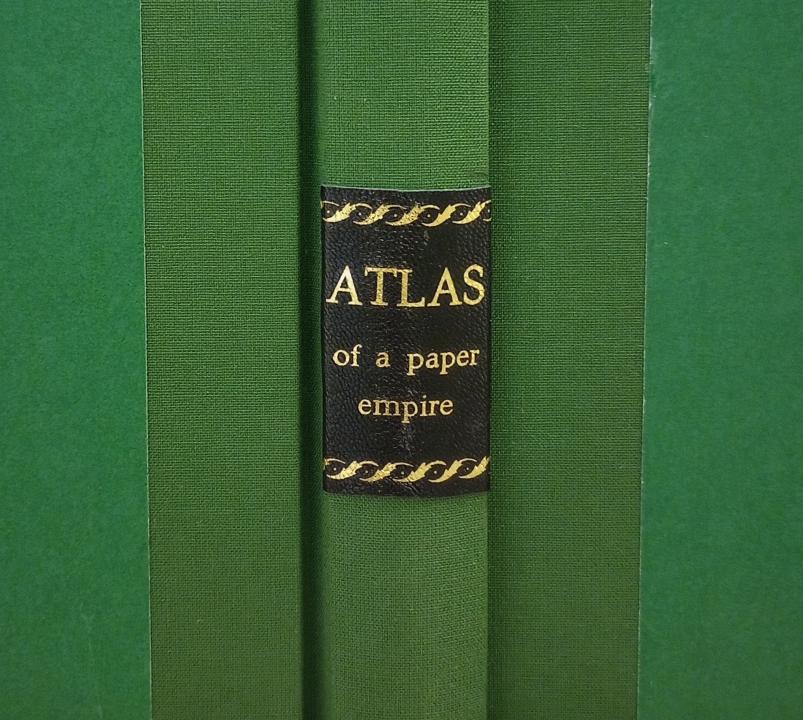
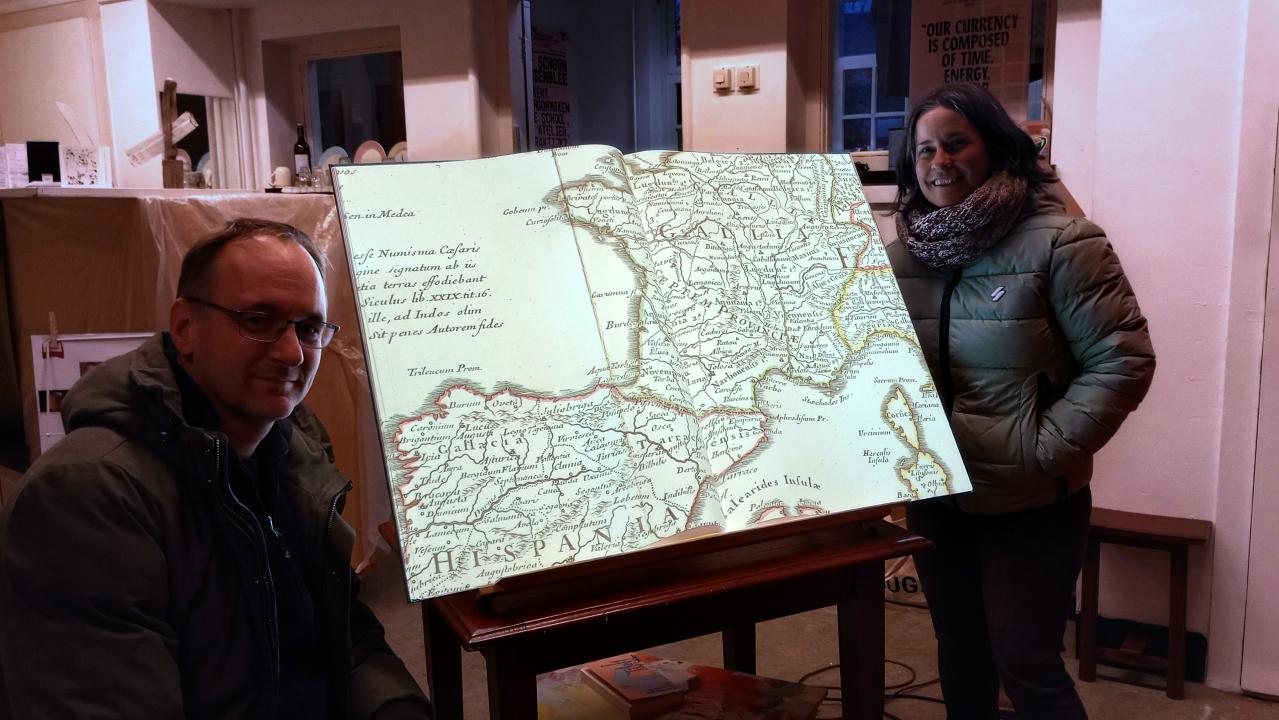
"Atlas of a Paper Empire" will be on display in the exhibition 1 SQUARE METER by the 004-collective, at Borgerstraat Studios 2-4 February 2024. This work was produced for the San Telmo ethnographic museum in Donostia-San Sebastian in 2022, and became part of its collection afterwards. It consists of a computer program that animates random trajectories through ultra-high definition digitized images of the museum's archive of antique maps, which are then projected onto a handbound volume filled with empty pages.
Read more