Litologika

Angurreta Harrobia Arte Espazioa presenta Litologika, una intervención escultórica del duo de artistas vasco-holandés Iratxe Jaio y Klaas van Gorkum, concebida específicamente para la antigua cantera de Mañaria (Bizkaia). El proyecto ofrece una mirada al pasado industrial del enclave a través de una intervención que dialoga con el paisaje natural.
Tres grandes bloques de piedra se alzan sobre una terraza rocosa excavada en la montaña, desde la que se contempla la sierra del Anboto, en el corazón de Bizkaia. Durante todo el verano, los artistas han trabajado para pulir minuciosamente superficies de cada bloque, hasta conseguir el brillo y la textura refinada propios del mármol utilizado en palacios y catedrales.

En conjunto, forman un muestrario monumental con las tres variedades de roca ornamental más emblemáticas extraídas en Bizkaia: Rojo Ereño, procedente de Gautegiz Arteaga, Negro Markina y el Gris Mañaria, de la propia localidad.


El resultado de su trabajo pone de relieve el contraste entre las superficies pulidas, brillantes, y la rugosidad de la piedra en bruto. Sin embargo, expuestas a la intemperie, las superficies irán perdiendo progresivamente su brillo y, con el paso de los años, la erosión volverá a transformar el aspecto de las piezas.
Esta dimensión temporal es fundamental para los artistas, para quienes el paso del tiempo y la acción de los elementos naturales constituyen una parte integral de la propia obra. El pulido, tradicionalmente asociado a la transformación de la piedra en un objeto arquitectónico o escultórico, se enfrenta aquí al proceso inevitable de erosión y retorno de la materia a su estado natural.
Los artistas han concebido su intervención específicamente para este enclave singular: un antiguo espacio industrial, abandonado desde la década de 1970, que ha sido rehabilitado como un ‘jardín de piedra’ por el escultor Víctor Arrizabalaga, y donde la herencia del paisaje y las huellas de la minería se convierten en el punto de partida para nuevas expresiones creativas. Litologika se nutre así de la historia del lugar para establecer una conexión poética entre el tiempo geológico, la arquitectura monumental y la industria extractiva.
Durante los próximos meses, los artistas continuarán trabajando en una publicación que recopilará una serie de fotografías de mobiliario litúrgico y elementos arquitectónicos en los que se ha utilizado Gris Mañaria, como las numerosas pilas bautismales en las iglesias de la región o las dieciséis columnas de mármol en la Capilla del Palacio Real de Madrid.
Las imágenes irán acompañadas por un texto concebido como una especie de guía arquitectónica que ofrecerá una reflexión crítica y filosófica sobre la función ceremonial de estos objetos y espacios, en relación con la lógica extractiva de la minería, cuya actividad ha dejado profundas huellas en el paisaje original.
La invervención se ha realizado gracias al apoyo de la Fundación Mondriaan.



Detalles
Intervención escultórica en una antigua cantera. Tres bloques de piedra con superficies pulidas.
Año: 2026
Relacionado
Artículo
El 18 de septiembre de 2026 Angurreta Harrobia Arte Espazioa presenta Litologika,...

Una de las visitas más interesantes que recibimos en la antigua cantera de Angurreta fue la de la...
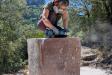
Hemos pasado el verano de 2026 en una antigua cantera de mármol en el País Vasco. Hace tres años,...